
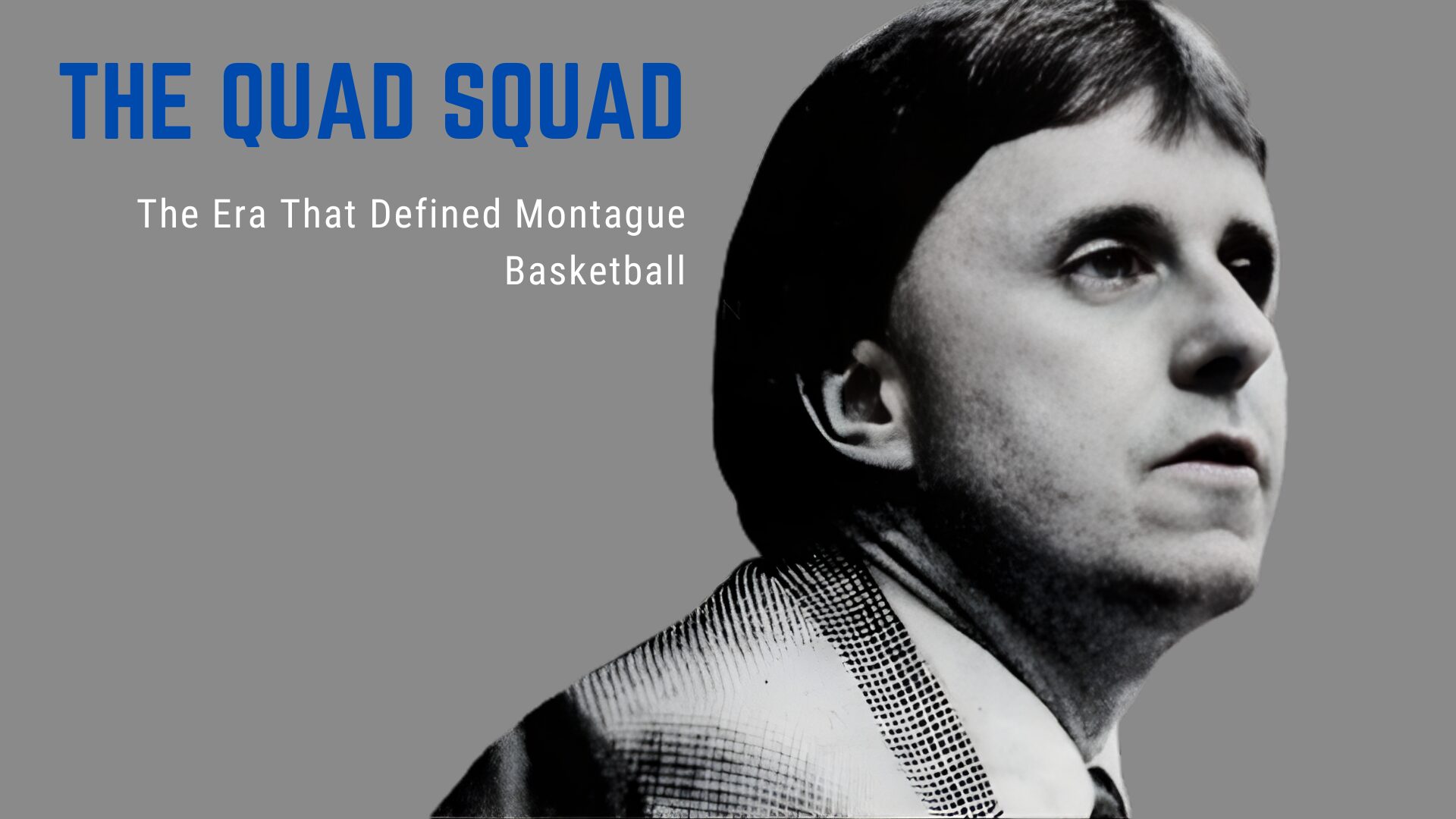
There was a stretch of time when, as a kid, nothing in the world mattered more than Friday night and the Wildcats taking the floor.
To me, those players were larger than life. They were heroes before I even knew what that word really meant. The gyms were packed shoulder to shoulder, loud in a way that felt physical, like the sound itself could move you. Every big basket, every defensive stop, every run sent a jolt through the crowd. The place didn’t just get loud, it shook.
From about the age of ten until my freshman year of high school, Wildcat basketball was electric. The entire week seemed to bend toward Friday night. You felt it at school. You felt it in town. Conversations drifted to matchups and rivals without anyone needing to say much. By the time warmups started, the gym was already alive, buzzing with expectation.
And when the Wildcats finally ran out, it felt like something important was about to happen.
Those teams were deep, disciplined, and intimidating in the best possible way. They were stacked with the best players in the area and played with a confidence that told you they were ready for anything. They competed every possession, every quarter, all the way to the end.
For those of us who grew up in Montague, that time has a name.
The Quad Squad era.
The Standard
Montague basketball during the late 1980s and early 1990s was not just successful. It was a standard. Four straight district championships did not happen by accident. They were the result of a program built on preparation, trust, and a culture that demanded consistency long before it demanded results.
Championship eras are rarely defined by a single night, a single player, or a single banner. In Montague, the Quad Squad years were built possession by possession, season by season, through a program that came to expect pressure, embrace rivalry, and perform when the moment demanded it.
By the late 1980s, Montague basketball was no longer emerging. It had arrived and what followed was amazing.
Four straight district championships, multiple 20-win seasons, and a reputation for toughness made the Wildcats a fixture in March conversations across West Michigan.
Jim Tate and a Program Built for March
Head coach Jim Tate did not hide from expectations. He leaned into it.
His teams were prepared to play anyone and everyone. Tournament basketball demands composure, and Montague had it. Whether trailing early, facing runs, or navigating foul trouble, the Wildcats stayed connected.
Tate often spoke about depth and trust, and the results backed it up. Montague’s success was rooted in the ability to play eight or nine players without sacrificing identity. That mattered in tough settings where nerves, fatigue, and momentum swing quickly.
The Osborne–Lindquist Foundation (Toughness and Trust)
Every great run starts with toughness, and this era belonged to players like Dave Osborne and Randy Lindquist.
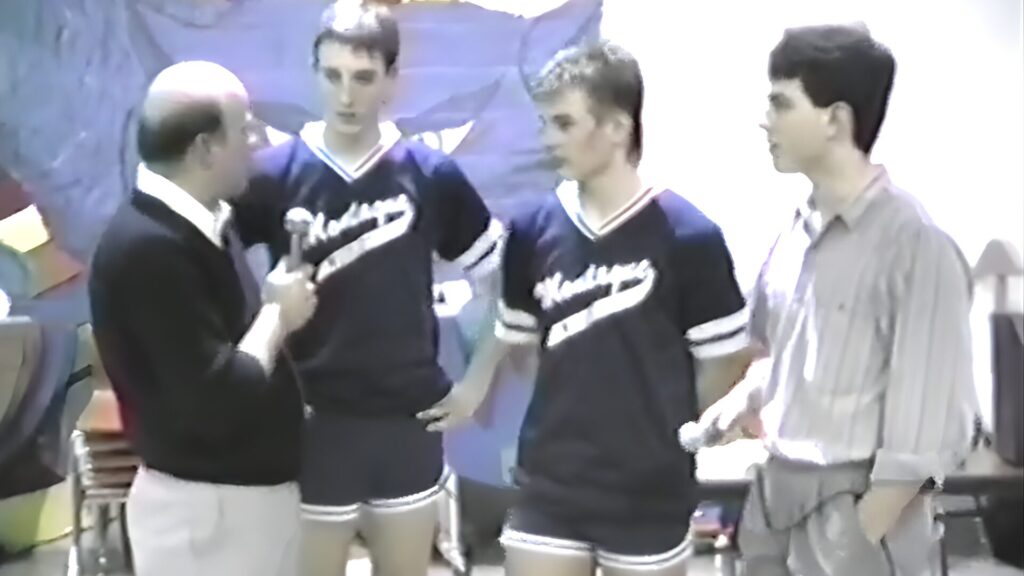
Osborne was the heartbeat of Montague basketball in some of its most physical years. He did the work that rarely made headlines. Defending. Rebounding. Handling pressure. Playing through contact. When games slowed down or emotions ran high, Osborne was the type of player coaches trusted and teammates followed.
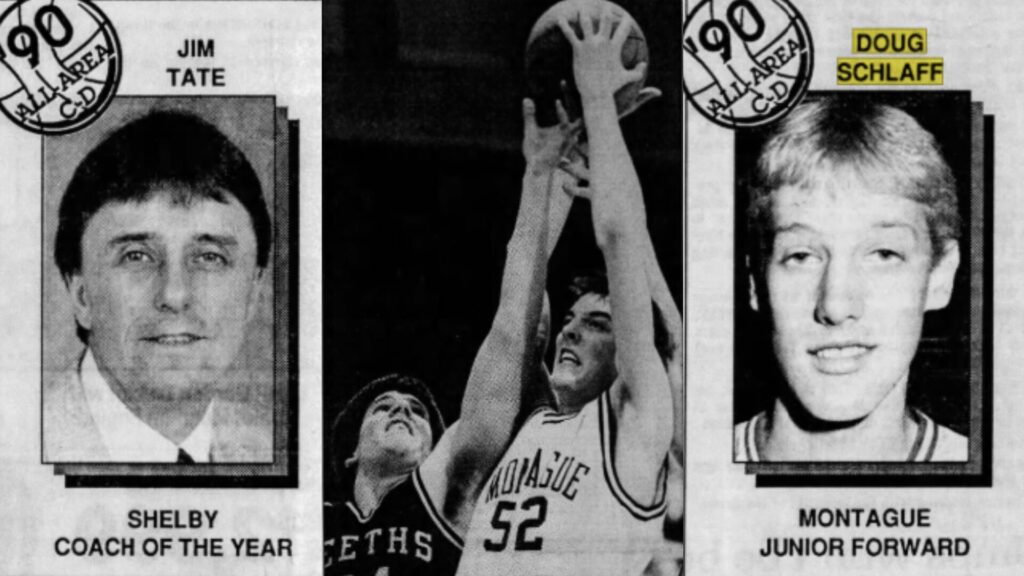
Lindquist provided balance inside. He scored, rebounded, and anchored the paint at a time when Class C basketball was physical and unforgiving. His presence allowed Montague to control tempo and punish teams that tried to speed them up.
This era established something critical. Montague would not be pushed around. Ever.
The Schlaff Years (Skill Meets Consistency)
As the program evolved, the spotlight naturally shifted to production, and the Doug and Paul Schlaff era elevated Montague basketball from tough to complete.

Doug Schlaff became one of the most accomplished players of the Quad Squad years. His ability to score inside and out, rebound, defend, and impact the game without forcing it made him a nightmare matchup. big scoring nights grabbed attention, but it was his consistency that defined him.
Paul Schlaff complemented that perfectly. He played with poise, defended multiple positions, rebounded in traffic, and delivered when the moment demanded it. Paul’s game reflected Montague basketball itself. Unselfish. Reliable. Grounded.
Together, the Schlaff brothers gave Montague both star power and stability.
Unbelievable Depth
What separated Montague from most programs during the Quad Squad years was not just its top-end talent. It was depth.
Starter level talent bled deep into Quad Squad line ups and players who would be automatic starters for other teams filled roles for the Wildcats without ego’s. Guys like Jim Grieve, Tom Cederquist, Rich Erdman, Bran VanBergen, Curt Babcock, JJ Flynn, Eric Webb, Ryan Anguilm, Mark Schneider, Matt Cotter, Rob Smith, Scott Lindquist, Brad Tate and others filled roles that allowed Montague to remain flexible without losing identity.
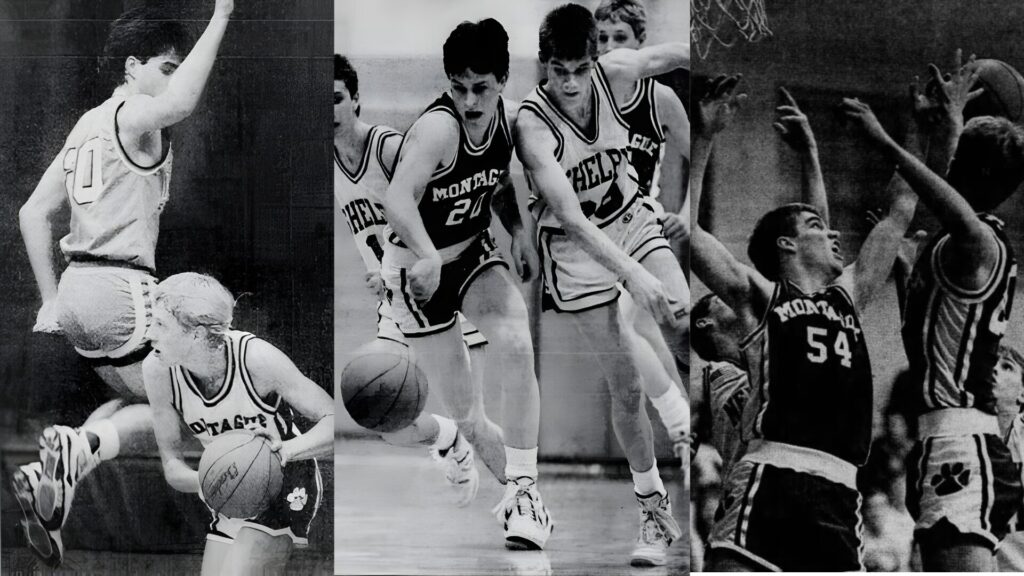
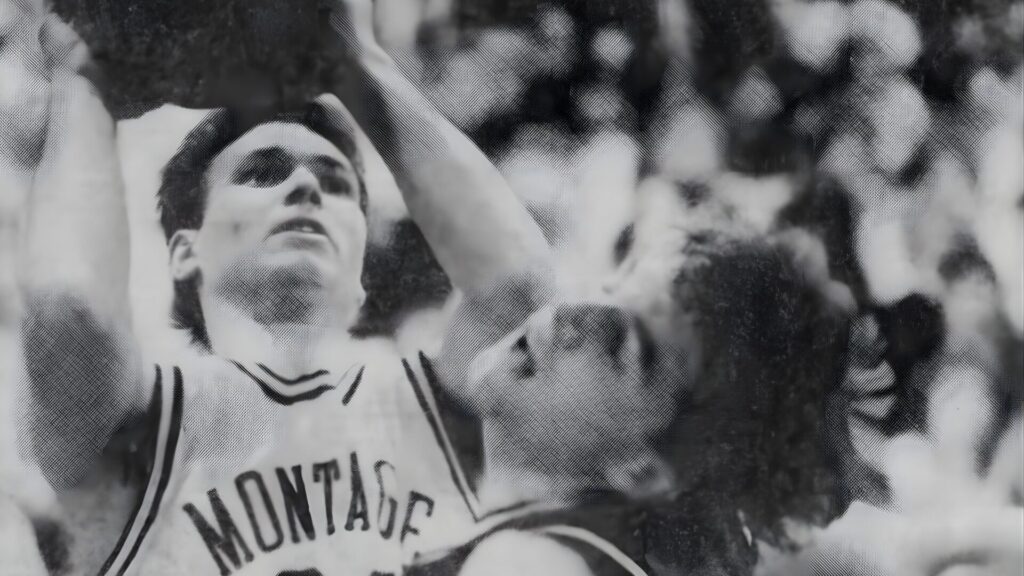

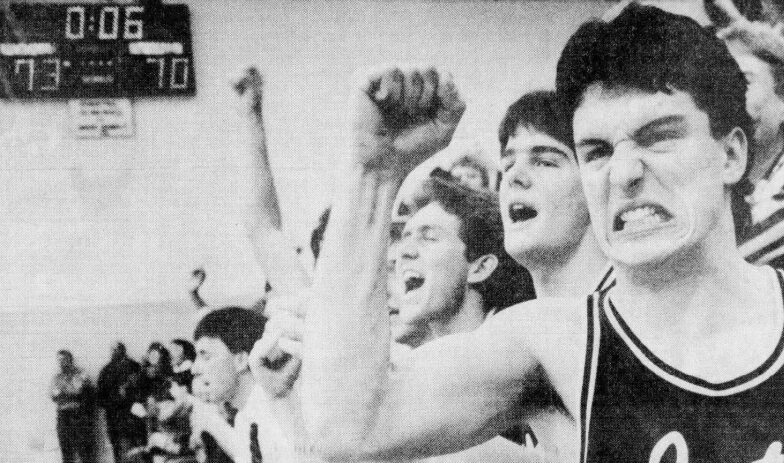
Montague could survive foul trouble, poor starts, or hostile road environments because they trusted their bench. Roles were understood. Minutes were earned. Egos stayed in check.
That depth mattered most in crunch time.
Winning Became the Expectation
All of these eras overlapped during what became known as the Quad Squad, a stretch defined by four consecutive district championships, 20-win seasons, and regular trips into high-pressure tournament games.
By this point, Montague basketball carried weight. Opponents knew they would be tested mentally and physically. Rivalries with Whitehall, Shelby, and Grant were no longer just games. They were events.
Free throws mattered. Defense mattered. Execution mattered. And Montague consistently delivered.
Coach Tate deserves credit here not just for wins, but for continuity. Players came and went, but the identity stayed. Discipline. Preparation. Trust. The Wildcats did not beat themselves.
Why These Eras Still Matter
The Quad Squad years were not about a single roster. They were about a standard passed from one group to the next.
Osborne and Lindquist set the tone.
The Schlaffs elevated the ceiling.
Webb, Smith, Grieve, Tate, and others sustained the culture.
Together, they created something that still gets talked about decades later because it was built the right way.
Montague basketball did not chase moments. It built eras.
And for those of us who grew up watching it, Friday nights were never just games. They were lessons in how teams, programs, and communities are supposed to work.
Feel like reminiscing, check out this YouTube playlist of Quad Squad games. Like our content, look here for more!











Brian Wright
January 22, 2026 at 3:25 pm
Great article Brent. No doubt some of those epic Shelby vs Montague games were incredible to be on the bench and to witness these battles. Great stuff!!🏀
Brent Raeth
January 22, 2026 at 10:08 pm
There were some great games. I know better than to bring up the Jason Kennedy end to end buzzer beater at Whitehall to Brad Tate. He is still salty about that loss.
Ben Schlaff
January 22, 2026 at 6:47 pm
Uncle Paul (Paul Schlaff) posted a bunch of these games on his YouTube “Paul Schlaff,” super cool to be able to go back to watch and read about this era.
Brent Raeth
January 22, 2026 at 10:08 pm
I linked his channel at the end of the article.
Ben Schlaff
January 22, 2026 at 6:47 pm
Uncle Paul (Paul Schlaff) posted a bunch of these games on his YouTube “Paul Schlaff,” super cool to be able to go back to watch and read about this era!
Donald Allan Barbo
January 23, 2026 at 2:11 pm
Excellent article and story, really! So reflective of an era and the identity of excellence in prep basketball. Keep that stuff coming!
Brent Raeth
January 26, 2026 at 8:58 am
Thanks, it was a great time to be a Wildcat!