Youth sports have never been completely free, there has always been some cost.
Registration fees, uniforms, equipment, and the occasional hotel stay. Parents have long understood that participation requires some level of sacrifice.
What has changed is the size of that sacrifice.
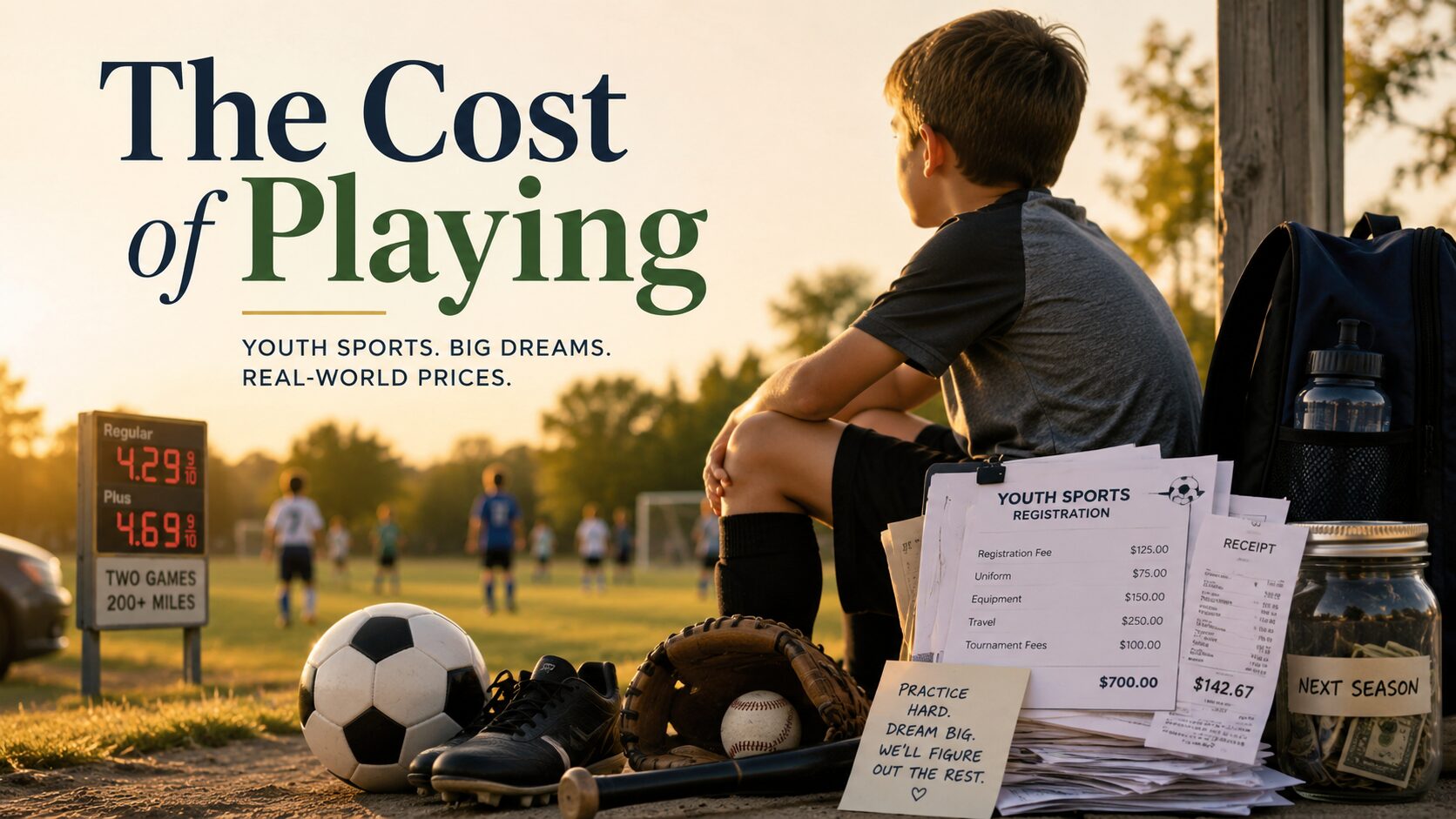
For many families, youth sports are no longer a modest seasonal expense. They have become a significant household commitment involving league fees, private instruction, specialized equipment, tournament travel, hotels, meals, and entire weekends built around competition.
The Aspen Institute’s Project Play found that the average American sports family spent $1,016 on one child’s primary sport in 2024, a 46 percent increase from 2019. When additional sports were included, the average approached $1,500 for one child. Families with multiple young athletes can quickly spend several thousand dollars each year. Project Play
That may be manageable for some households.
For others, it means a child never gets the opportunity to play.
The Registration Fee Is Only the Beginning Cost
The cost of youth sports is rarely contained in the number printed on the registration form.
A $100 league fee can appear affordable until the family adds shoes, a glove, a bat, a uniform, transportation, admission fees, concessions, and the time required to attend practices and games.
Travel sports take the commitment even further.
There may be team dues, tournament entry fees, coaching expenses, hotel rooms, gas, restaurant meals, and private training intended to help an athlete keep pace with everyone else. Project Play identified registration costs, travel, lodging, camps, and private instruction as major drivers of the recent increase in family spending. Project Play
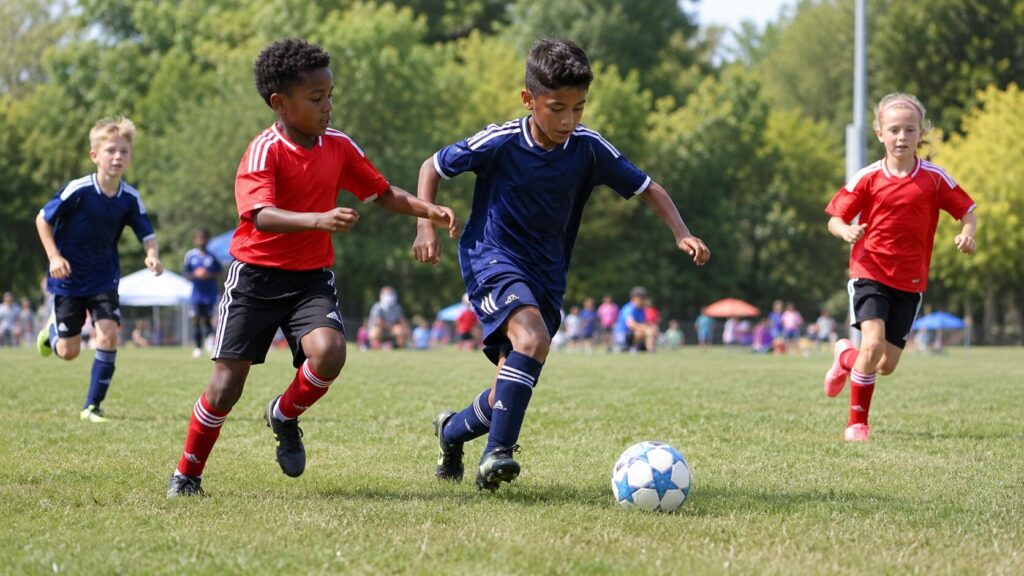
The result is that families are not simply deciding whether their child wants to play baseball, basketball, soccer, hockey, or volleyball.
They are deciding whether the household can absorb the entire lifestyle that may come with it.
That calculation becomes even harder when there is more than one child in the family.
The Hidden Cost Is Time
Money is only part of what families spend.
Youth sports also require time, and time is not distributed equally.
A parent working a predictable schedule may be able to leave early for a 5:30 p.m. game. A parent working an hourly job, evenings, weekends, or multiple jobs may not have that flexibility.
Some families have two vehicles and several adults available to help. Others have one vehicle and no backup when practices overlap.
A child may technically be able to afford the registration fee but still be unable to participate because there is no reliable transportation, no one available to supervise younger siblings, or no way for a parent to miss work repeatedly.
These barriers are harder to see because they do not appear on a receipt.
But they are every bit as real.
When Opportunity Depends on Income
Sports have always been presented as a place where talent, effort, and determination matter more than background.
The growing pay-to-play system challenges that promise.
The Project Play survey found that families earning at least $100,000 annually spent $1,471 more on a child’s primary sport than families earning less than $50,000. The survey also found that spending among parents ranged from nothing to nearly $25,000. Project Play
More money can purchase more opportunities.
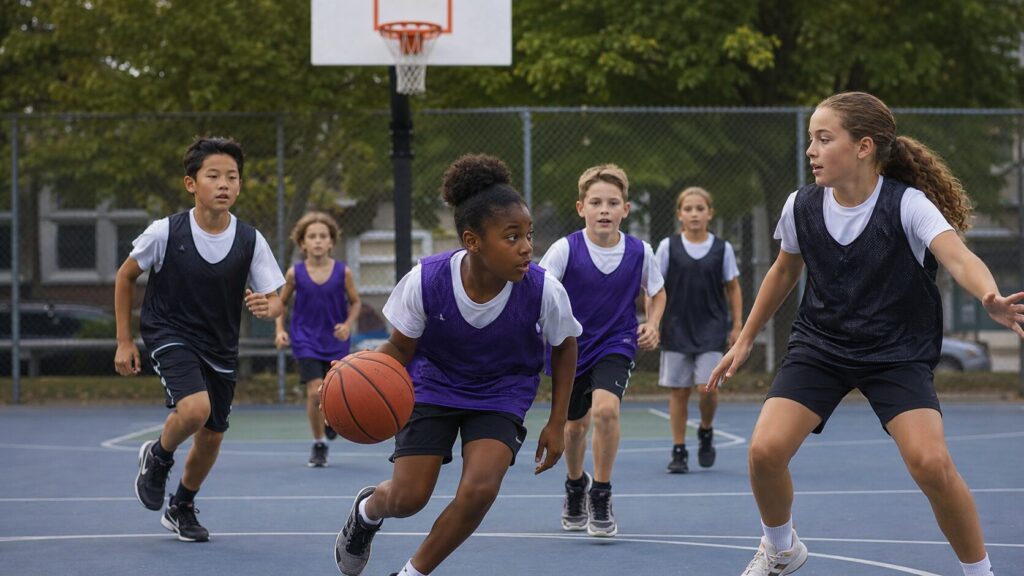
It can pay for better equipment, additional seasons, private coaching, exposure tournaments, recruiting services, and year-round training. None of those things guarantee success, but they can create advantages.
A talented child from a lower-income household may never receive those same opportunities.
That does not mean every travel team or private instructor is doing something wrong. Many coaches and organizations provide tremendous value. Families also have every right to invest in experiences they believe will help their children.
The problem begins when the expensive version of the sport starts to feel like the only legitimate version.
When recreational leagues are treated as inadequate, when children feel pressure to specialize earlier, and when parents believe they must spend more simply to keep their child from falling behind, participation becomes less about interest and more about access.
What Are We Actually Paying For?
Parents rarely spend money on youth sports because they expect a financial return.
Most understand that an athletic scholarship is unlikely and a professional career is even less likely.
They spend because sports can teach discipline, teamwork, confidence, accountability, and resilience. They want their children to be active, make friends, belong to something, and learn how to compete.
Those are worthwhile reasons.
But they also raise an important question.
If the greatest value of youth sports is personal development, should those benefits be available primarily to families who can afford the highest fees?
A child does not need an elite facility to learn teamwork.
A child does not need a national tournament to develop confidence.
A child does not need private lessons at age eight to experience the joy of improving.
We should be careful not to make the most expensive version of sports the standard by which every other experience is judged.
Organizations Are Working to Close the Cost Gap
The good news is that many organizations recognize the problem and are working to keep children from being priced out.
Every Kid Sports provides financial assistance intended to help lower-income families cover youth sports registration expenses. Its model directs support to parents so children can participate in eligible programs that might otherwise be out of reach. Every Kid Sports
Good Sports focuses heavily on equipment. The organization works with programs in high-need communities and has distributed more than $137 million in new sporting goods since 2003, helping more than 11 million children across all 50 states and Puerto Rico. Good Sports
Michigan has organizations working on the issue as well.
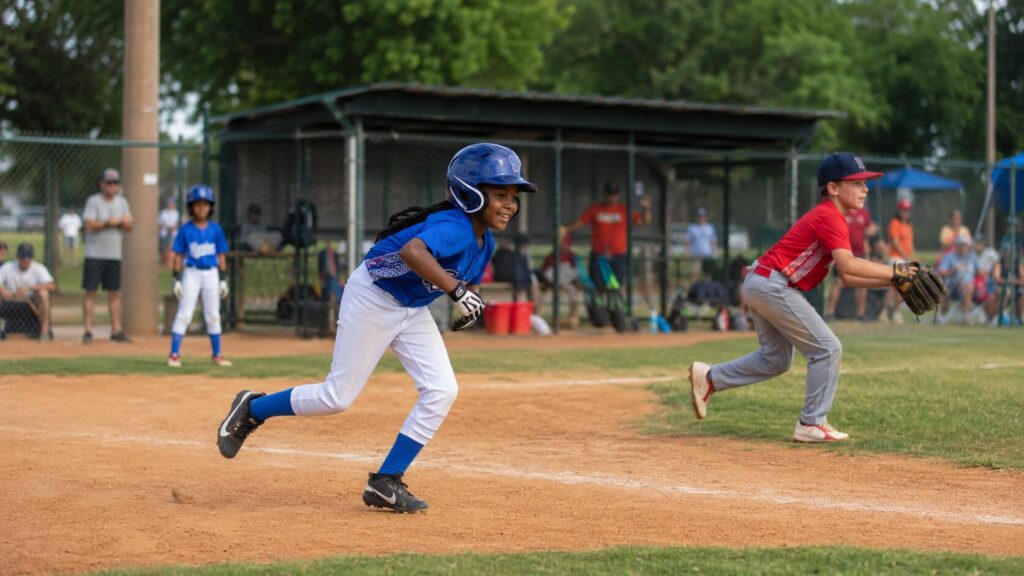
The Michigan Youth Sports Initiative sponsors teams, provides equipment and uniforms, and supports young athletes through coaching and mentorship. The organization reports supporting more than 300 children and funding 13 teams. MYSI
The Jennifer E. Benner Foundation provides athletic scholarships, fee assistance, equipment support, and grants to teams and leagues serving under-resourced Michigan communities. Jennifer E Benner Foundation
These organizations matter because they address different parts of the problem.
Sometimes the barrier is registration.
Sometimes it is equipment.
Sometimes it is transportation, coaching, or simply knowing that assistance exists.
There is no single solution because there is no single cost.
Local Communities Still Matter Most
National foundations can provide resources, but the strongest solutions often begin locally.
Recreation departments can offer payment plans and scholarship programs.
Leagues can keep a supply of donated equipment.
Schools can avoid creating participation fees that quietly exclude students.
Businesses can sponsor teams without turning every field and uniform into an advertising contest.
Booster clubs can dedicate part of their fundraising to confidential assistance for families in need.
Coaches can resist the pressure to make every season longer, every tournament farther away, and every level of competition more expensive.
Parents can donate equipment that their children have outgrown rather than allowing it to collect dust in a garage.
Most importantly, communities can stop treating financial hardship as something families should be embarrassed to discuss.
Parents should not have to choose between asking for help and watching their child sit on the sidelines.
Expensive Does Not Always Mean Better
Youth sports have become an industry, and industries naturally search for ways to sell more.
More training.
More tournaments.
More exposure.
More equipment.
More seasons.
The message is often subtle but powerful: serious athletes do more, travel farther, and spend more.
That message deserves to be challenged.
More is not always better.
A child playing on a local team with friends may receive exactly what they need from sports. A volunteer coach can have as much influence as a highly paid instructor. A community field can create the same joy as a premium complex.
The quality of a youth sports experience should be measured by whether children are learning, improving, belonging, and enjoying the opportunity to play.
It should not be measured by the size of the family’s investment.
The Goal Should Be Participation
There will always be elite teams, expensive equipment, and families willing to travel across the country for competition.
That is not likely to change, nor does it necessarily need to.
But the foundation of youth sports should not be built around the most expensive level.
It should be built around participation.
Every child should have a realistic opportunity to try a sport, learn its fundamentals, and decide whether they enjoy it. That first opportunity should not depend on household income, a parent’s work schedule, or the ability to purchase hundreds of dollars in equipment.
Sports are supposed to reveal potential.
They should not screen children out before their potential has a chance to appear.
The true cost of playing is not only what families spend.
It is also what communities lose when talented, curious, and enthusiastic children are left on the sidelines because the price of admission became too high.

If you are interested in more of our content, head to our website at catchmarksports.com, our YouTube, or our Facebook page! This coverage is powered by CatchMark Technologies: learn more at catchmarkit.com. Where you can find all of you MSP and Technology needs.