
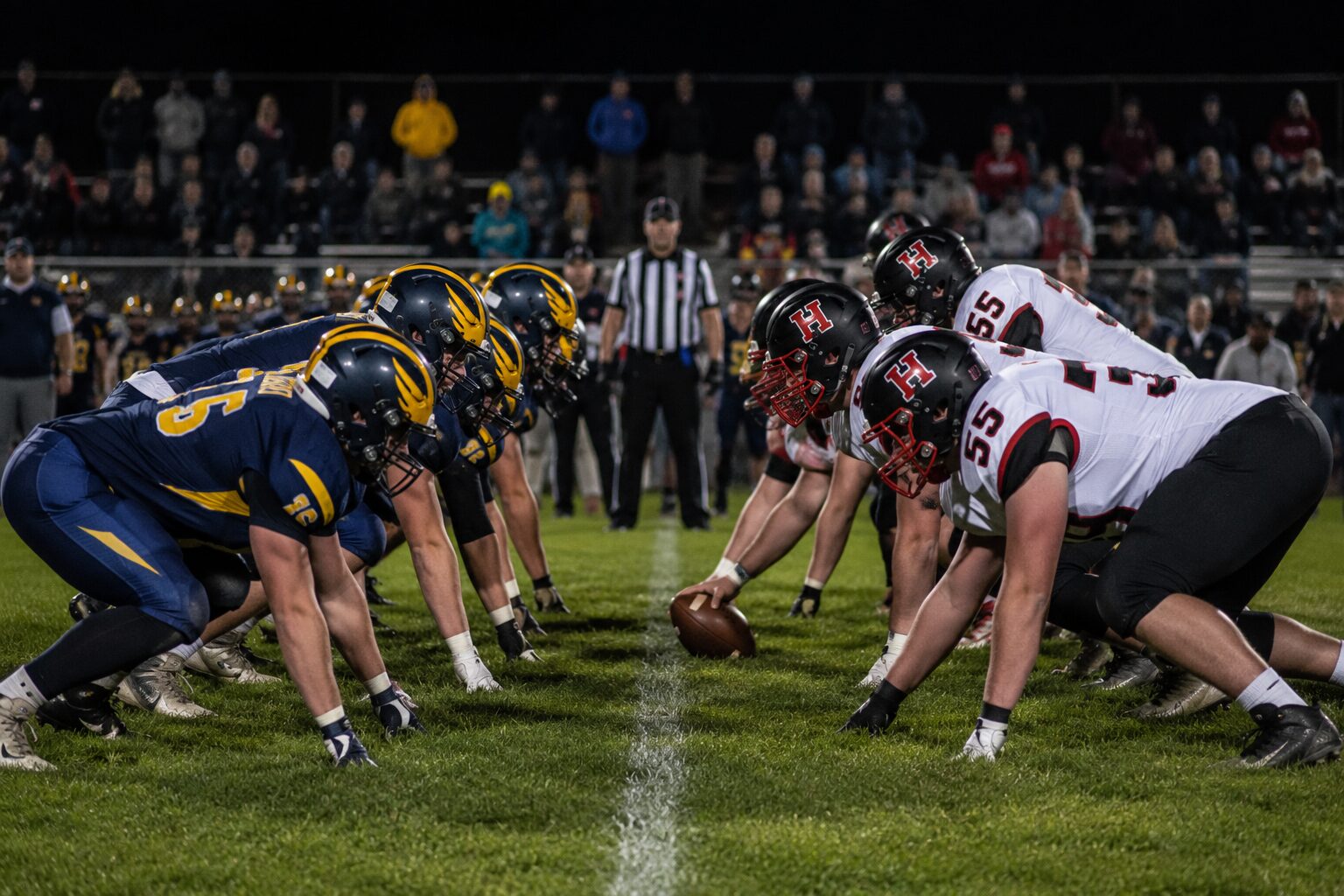
Three years ago, the West Michigan Conference made a promise.
As the league welcomed Ludington, Manistee, Orchard View, Fremont, Holton and Hesperia to join longtime members Montague, Whitehall, North Muskegon, Shelby, Hart, Mason County Central, Ravenna, and Oakridge, conference leaders weren’t simply expanding to 14 schools, they were building a conference that could evolve with the communities it serves.
They understood something every school district eventually faces. Enrollment changes. Communities grow. Others shrink. Schools that look evenly matched today may not look the same five or ten years from now.
Rather than waiting decades to react, the West Michigan Conference built flexibility into its future. Every three years, member schools would review enrollment figures and, if necessary, adjust the Lakes and Rivers divisions to keep schools of similar size competing together.
This fall, that vision becomes reality for the first time. Hart moves into the Lakes Division. Manistee moves into the Rivers Division.
The change isn’t a reward. It isn’t a punishment. And it certainly isn’t based on championships or recent success. It’s simply the conference doing exactly what it set out to do.
A Conference Designed to Adapt
For nearly a century, the West Michigan Conference has been built on tradition.
Communities have rallied around Friday night football, packed gymnasiums and rivalries that have stretched across generations. Those traditions remain the heart of the conference today.
But while tradition stays the same, the schools themselves do not.
Communities gain residents. Others lose population. Student enrollment rises in one district while declining in another. Over time, those shifts affect the number of athletes available to compete, the depth of varsity and junior varsity rosters and the long-term health of athletic programs.
Rather than allowing those differences to grow unchecked, conference leaders created a system that could adapt as the schools changed.
Every three years, enrollment figures are reviewed. The seven largest schools compete in the Lakes Division, while the seven smallest make up the Rivers Division. Once those alignments are established, they remain in place for the next three school years before another review takes place.
The process removes opinion from the equation. Division placement is determined by enrollment, not championships, recent records or competitive success.
The First Realignment
When the conference adopted its new structure in 2022, everyone knew this day would eventually arrive.
The only question was when. Three years later, the conference completed its first scheduled enrollment review. Only one adjustment was needed.
Hart’s enrollment had grown just enough to surpass Manistee’s, moving Hart into the group of the conference’s seven largest schools and placing Manistee among the seven smallest.
Under the conference’s enrollment-based system, the move was automatic. In many ways, this isn’t simply a divisional swap.
It’s the first real proof that the conference’s long-term vision is working exactly as intended.
Why Enrollment Matters
At first glance, moving one school from one division to another may not seem significant. In reality, enrollment influences nearly every athletic program.
Larger schools typically have a greater pool of students to participate in athletics, while smaller schools often face greater challenges maintaining roster depth across multiple sports. Football frequently highlights those differences because of the number of athletes required, but the same realities exist in basketball, baseball, softball, volleyball, soccer and many other sports.
The conference isn’t trying to guarantee equal records. Its goal is to create competitive opportunities among schools of similar size while preserving the long-term health of every athletic program.
The same enrollment trends are reflected beyond the conference. For the 2026-27 school year, the Michigan High School Athletic Association also reclassified Manistee from Class B to Class C, recognizing the same enrollment changes that influenced the conference’s divisional adjustment. While the MHSAA does not determine conference alignments, both organizations rely on current enrollment data to organize competition.
What Fans Will Notice
For most athletes and fans, the biggest change won’t be found in the standings. It will be found on the schedule.
Schools that have regularly competed against Hart in divisional play will now see Manistee more frequently. Hart, meanwhile, begins building new divisional rivalries within the Lakes Division while continuing many familiar matchups through crossover competition.
Conference leaders don’t expect the move to dramatically reshape the league. Instead, they expect something far more natural. New rivalries will develop. Different opponents will become familiar. Annual road trips will change.
Over time, those new matchups will become just as much a part of the conference’s identity as the rivalries that have defined it for decades.
The New Look West Michigan Conference
The updated alignment will remain in place through the 2028-29 school year, with the next enrollment review scheduled before the 2029-30 season.
Lakes Division
- Ludington
- Fremont
- Whitehall
- Oakridge
- Orchard View
- Montague
- Hart
Rivers Division
- Manistee
- Mason County Central
- Shelby
- Ravenna
- North Muskegon
- Hesperia
- Holton
Looking Beyond Conference Play
The timing of the realignment also coincides with a significant change in Michigan high school football.
Beginning this fall, the MHSAA will seed all 11-player football playoff divisions through the regional finals using average playoff points. As a result, a team’s regular-season schedule will carry even greater importance when postseason seeds are determined.
The conference’s divisional adjustment was not made because of that change, but different divisional opponents can influence strength of schedule, making every regular-season game even more meaningful.
A Vision Fulfilled
Three years ago, the West Michigan Conference didn’t simply add schools. It changed the way it would operate for generations to come. Rather than creating fixed divisions, conference leaders created a conference capable of evolving alongside its member schools.
Hart and Manistee happen to be the first schools affected by that decision, but they almost certainly won’t be the last.
Three years from now, enrollment figures will once again be reviewed. If another school grows or declines enough to change divisions, the conference will adjust once more—not because something has gone wrong, but because that’s exactly what the system was designed to do.
For nearly 100 years, the West Michigan Conference has balanced competition with community.
This latest realignment shows that preserving tradition doesn’t always mean standing still.
Sometimes, the best way to protect the future is to be willing to evolve with it.

If you are interested in more of our content, head to our website at catchmarksports.com, our YouTube, or our Facebook page! This coverage is powered by CatchMark Technologies: learn more at catchmarkit.com. Where you can find all of you MSP and Technology needs.












Scoop Hansen
July 23, 2026 at 12:04 pm
Orchard View was welcomed into the WMC the same year as Ludington, Manistee, Fremont, Holton and Hesperia
Kara Raeth
July 23, 2026 at 12:37 pm
Thank you for reaching out. We appreciate it and have corrected the article.
Greg Russell
July 24, 2026 at 7:42 am
Thanks Kara for a great article. As one of the eight voting members at the time that supported expansion, this is exactly what we envisioned for the new conference. The writing was on the wall from the Mhsaa and tournament play that the bigger schools needed to play schools of their own size and the same for those in the smaller division of enrollment. Your explanation was spot on.