Understanding the Requirements, Safety Standards, and Scoring That Shape the Sport
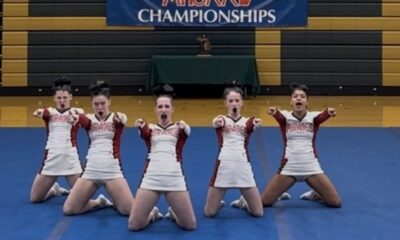
Competitive Cheer in Michigan is one of the most structured and rule-heavy high school sports. The Michigan High School Athletic Association (MHSAA) regulates everything: team size, round expectations, uniforms, legal and illegal skills, scoring, timing, and athlete conduct. Because routines include stunts, pyramids, tumbling, jumps, motion sequences, and coordinated performances from up to 16 athletes at a time, the rulebook is designed to keep competitions fair, organized, and safe.
This guide breaks down every major rule category in the sport so athletes, parents, fans, and new coaches can understand exactly what Competitive Cheer requires.
Team Size, Rounds, and Competition Format
Competitive Cheer consists of three rounds, each with its own structure and required skills.
Round 1 — Jumps, Motions, Precision, and Voice Projection
- Teams may have 4 to 16 athletes on the floor.
- No stunts or tumbling are allowed.
- Judges score teams on synchronization, motions, spacing, formations, jumps, voice changes, and crowd-leading precision.
- Timing is strict: going over or under set limits results in penalties.
Round 2 — Skills and Technical Ability
- Mandatory number of athletes depends on division:
- D1: 12 competitors
- D2: 10 competitors
- D3: 8 competitors
- D4: 6 competitors
- Teams performing with fewer athletes receive a 10-point penalty.
- Skills include flexibility moves, high kicks, gymnastic elements performed at floor level, and specific required motions.
- No stunts above waist level, baskets, or extended pyramids are allowed.
Round 3 — Stunts, Pyramids, and Tumbling
- Teams may again use 4 to 16 athletes.
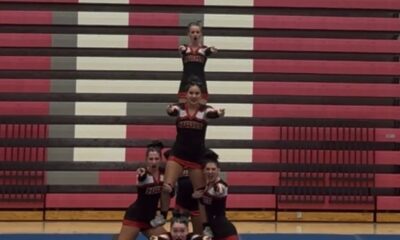
- Full-height stunts, pyramids, and tumbling sequences are legal if properly spotted and safely performed.
- This is the highest scoring round with the most safety rules.
Tournament Structure
- Districts → Regionals → Finals.
- Total scores of all three rounds determine placement.
- A tie in Districts/Regionals advances both teams.
- A Finals tie is settled by Round 3 scores; if still tied, teams share the championship.
Safety, Spotting, and Skill Legality
Because Round 3 includes elevated stunts and transitions, safety regulations are extremely detailed.
Spotting Requirements
- Any stunt with arms fully extended overhead requires a spotter.
- Spotters must maintain focus, remain in the proper position, and cannot stand under the flyer.
- Bases must maintain a controlled grip during lifts, transitions, and dismounts.
- Flyers cannot perform skills above a certain height without proper support.
Legal and Illegal Stunts
Legal skills include:
- Shoulder sits
- Extended two-leg stunts with spotter
- Supported single-leg stunts at the appropriate level
- Braced transitions
- Basic dismounts with control
Illegal skills include:
- Basket tosses in Round 3 without full safety requirements
- Unbraced single-leg extended stunts without spotter contact
- Flips or rotations without continuous hand-to-hand or hand-to-body connection
- Twisting dismounts beyond allowed rotation levels
- Stunts that land on stomach, head, neck, or in uncontrolled rolls
Tumbling Rules
- Tumbling in Michigan Competitive Cheer is limited and must be controlled.
- Skills like aerials, layouts, and unassisted backflips are prohibited.
- Forward rolls, cartwheels, and walkovers may be legal depending on round.
Uniforms, Appearance, and Accessory Standards
MHSAA Competitive Cheer enforces detailed uniform rules to ensure safety and prevent distraction.
Uniform Requirements
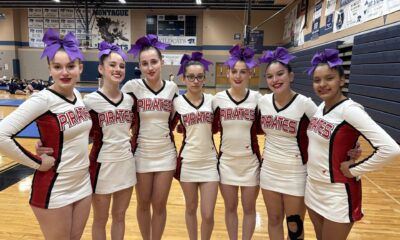
- Uniforms must match and fit properly.
- No exposed midriffs if the uniform shifts during skills.
- Bows must be one solid color, non-metallic, and unadorned.
- Scrunchies with sequins, rhinestones, or glitter are prohibited.
Hair and Jewelry
- Hair must be secured away from the face.
- No metal fasteners in hair.
- No jewelry of any kind during competition — including earrings covered by tape.
Scoring and Penalties
Competitive Cheer scoring blends execution, difficulty, synchronization, and technical precision.
Scoring Categories
- Execution: motions, jumps, stunts, tumbling, and transitions
- Difficulty: level of skills performed legally
- Formations & Spacing: clean transitions, spacing consistency
- Voice & Presentation: volume, clarity, rhythm, crowd connection
- Creativity: choreography and flow
Judges use detailed score sheets for each round. Small errors cause minor deductions, while falls, incomplete skills, and illegal elements result in major penalties.
Safety Deductions
Major penalties include:
- Stunt fall: large deduction
- Pyramid collapse: significant loss
- Improper spotter position
- Illegal stunts or tumbling skills
- Early or late routine timing
- Incorrect number of participants per round
- Stepping outside performance boundaries
These penalties can swing a team from first place to last in a single round.
Athlete and Coach Conduct
Competitive Cheer expects strict professionalism from both athletes and coaches.
Athlete Expectations
- Follow all safety rules.
- Maintain sportsmanship, no taunting or profanity.
- Respect judges and staff.
- Arrive on time for check-in and warm-ups.
Coach Requirements
- Complete all MHSAA rules meetings and safety courses.
- Maintain CPR certification.
- Ensure uniform legality and skill legality before competition.
- Handle inquiries respectfully through proper procedures.
Coaches may only inquire about their own team, and only for mathematical errors or blank scoring fields — not subjective scores.
Timing, Boundaries, and Music
- Each round has strict time limits; going over results in penalty points.
- Athletes stepping outside boundary lines incur deductions.
- Music must be appropriate for school settings, with clean edits and no profanity.
Why These Rules Matter
Competitive Cheer is built on precision, teamwork, and athletic skill. These rules exist to protect athletes during high-risk stunts and to keep competitions consistent across the state. With dozens of athletes performing synchronized and elevated skills at once, the sport depends on clear standards, strong coaching, and a safe environment.