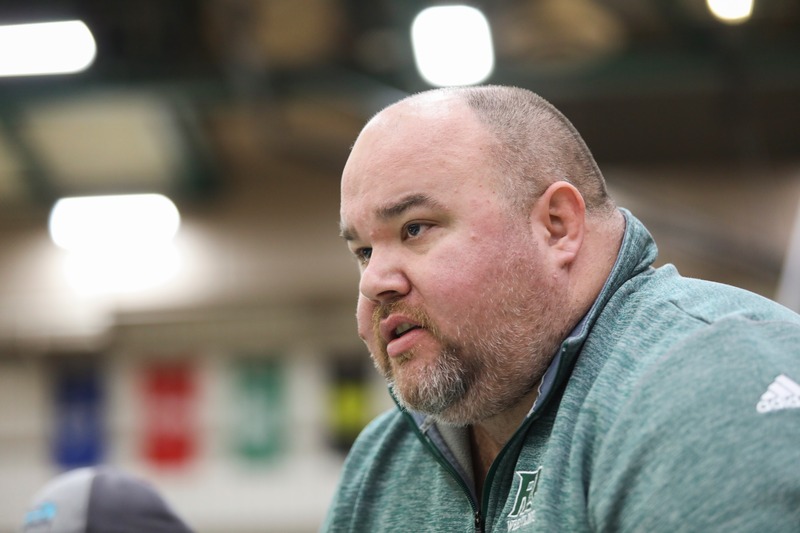
In Muskegon-area wrestling, some legacies are measured in banners and trophies. Others are measured in a last name that keeps resurfacing—on the mat, in the corner, and in the record books. The “Brink era” belongs to the second category. It is not the story of one person, but of a father and son whose influence stretched across decades, shaping wrestling culture at schools like Fruitport, Whitehall, and Reeths-Puffer.
Dan Brink is the starting point of that story.

Long before the state titles, All-American honors, and packed gyms, Dan Brink was establishing what winning wrestling looked like in West Michigan. As a competitor, he reached elite levels himself, gaining firsthand experience in what it took to succeed in the sport. But his lasting impact came after his own days on the mat, when he returned to the area as a coach and teacher of the sport.
Dan Brink became known not for quick turnarounds, but for building rooms that endured. His approach emphasized fundamentals, discipline, conditioning, and mental toughness. Teams he coached were prepared not just to win dual meets in January, but to survive the grind of February tournament wrestling. That distinction mattered. It separated programs that occasionally spiked from programs that stayed competitive year after year.
At Whitehall, Dan Brink was part of a period when the Vikings established themselves as a legitimate wrestling presence. His teams were known for being well-drilled, physically tough, and difficult to break late in matches. More importantly, he helped create expectations—wrestling wasn’t something you tried; it was something you committed to.
Those same principles followed him to Fruitport, where his influence took deeper root. During his years with the Trojans, the wrestling room became a place where standards were clear and non-negotiable. Wrestlers learned early that preparation mattered, that effort was visible, and that success was earned long before match day. That environment didn’t just produce wins—it produced belief.
That belief is what made the next chapter possible.
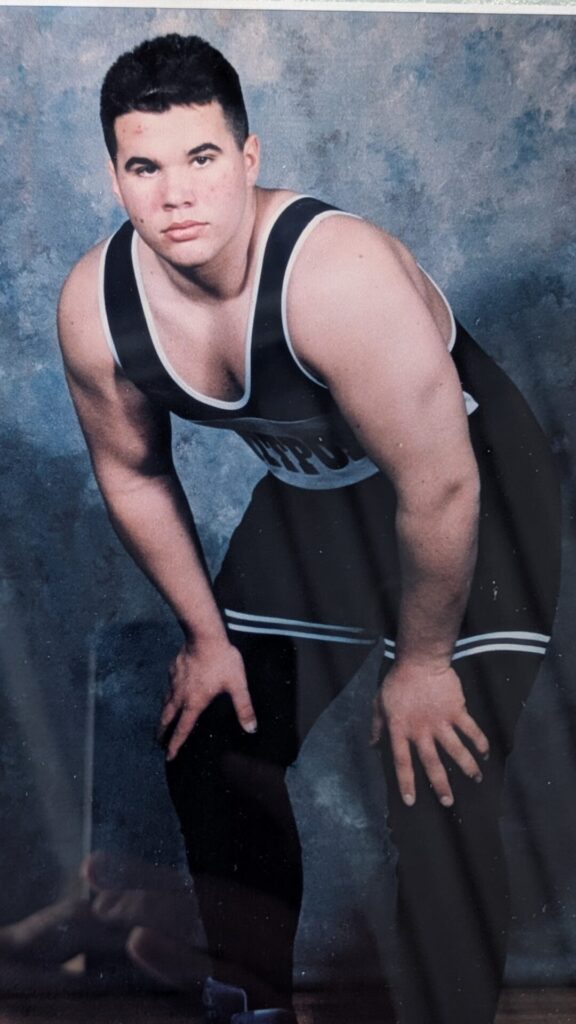
Dan Brink wasn’t just coaching wrestlers; he was raising one. His son, Matt, grew up immersed in the sport, absorbing not only technique but mindset. The lessons weren’t limited to takedowns or conditioning drills—they were about accountability, mental resilience, and understanding what it took to reach goals that seemed out of reach.
When Matt Brink emerged as a dominant heavyweight at Fruitport in the mid-1990s, it didn’t feel accidental. His success looked like the natural extension of the culture Dan Brink had been reinforcing for years. The preparation, the composure, and the consistency all reflected the same values that had defined Dan’s teams.

Dan’s influence didn’t stop with his son’s accomplishments. His role as a mentor extended to countless wrestlers who passed through his rooms—many of whom carried those lessons into their own lives, whether in coaching, parenting, or leadership roles outside of sports. That is often the quiet measure of a builder: success that continues long after the scoreboard lights go dark.
The significance of Dan Brink’s career is underscored by the fact that he and his son would both later be recognized by the Muskegon Area Sports Hall of Fame. Few families leave that kind of parallel imprint on a single sport in a single region. It speaks to both longevity and depth of impact.
When people talk about the Brink era today, it’s easy to focus on the championships and records associated with Matt Brink. But those achievements rest on something deeper. Dan Brink’s legacy is the foundation—the culture, expectations, and respect for the sport that made sustained success possible.
In the end, the Brink era is not just about greatness achieved. It’s about greatness taught, modeled, and passed on. Dan Brink built the structure. His son carried it forward. Together, they shaped a chapter of Muskegon-area wrestling that still echoes through local gyms decades later.
Interested in more content from us? Check out our website catchmarksports.com, our Facebook page, or our YouTube page!